How Iran’s air defence faced a major test
China’s HQ-9B air defence under scrutiny after US-Israel strikes breach Iran’s shield
Iran’s air defence network is facing tough questions after coordinated strikes by the United States and Israel reportedly penetrated deep into Iranian territory. At the centre of the debate is the Chinese-origin HQ-9B long-range surface-to-air missile system, which is a key part of Iran’s layered defensive shield. The incident has highlighted how modern air warfare is less about individual missiles and more about how well sensors, radars and command systems work together.
Iran has spent more than two decades building a complex air defence grid using Russian, Chinese and locally developed systems. The aim was to create multiple protective rings that could detect and destroy incoming aircraft, drones or missiles at different distances. On paper, the network looks strong. However, recent reports suggest that several radar sites and missile batteries were hit early in the strikes, raising concerns about gaps in coordination and resilience.
What the HQ-9B system is
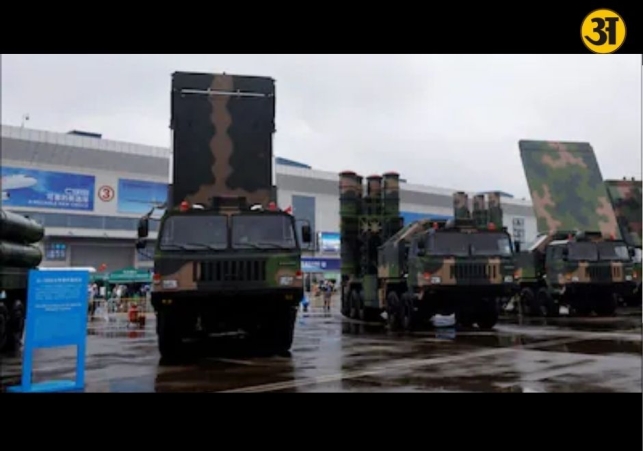
The HQ-9B is a long-range surface-to-air missile system developed in China to intercept fighter jets, cruise missiles and other high-altitude threats. But the term “HQ-9B-backed infrastructure” refers to much more than just missile launchers. It includes a full ecosystem of phased-array surveillance radars, mobile command centres, communication links and transporter-erector-launcher vehicles.
In modern warfare, the missile itself is only the final step. Radars first detect incoming targets, command vehicles analyse the data, and then launchers fire the missiles. All these parts must work together in real time. The HQ-9B is designed to engage multiple targets over long distances and can be rapidly moved to avoid enemy strikes.
Iran inducted the HQ-9B to strengthen its ability to counter advanced aircraft and long-range cruise missiles. It operates alongside Russian-supplied S-300PMU-2 systems and Iran’s indigenous Bavar-373 batteries. Together, these are meant to form the outer layer of Iran’s air defence umbrella, especially around critical cities like Tehran.
Closer to potential targets, Iran deploys medium-range systems such as Khordad-15 and Raad. These mobile units are backed by short-range point defence weapons designed to intercept drones and low-flying threats that slip through the outer layer. The concept is simple: if one ring fails, the next ring should stop the attacker.
ALSO READ: Israel-US strikes on Iran trigger regional emergency; explosions reported across Gulf
ALSO READ: Pakistan launches retaliatory strikes on Afghanistan, tensions surge
Why the system struggled
Despite this layered design, the recent US-Israeli strikes appear to have exposed important weaknesses. Analysts believe the attackers likely used a combination of stand-off weapons, electronic warfare and possibly drone saturation tactics.
Stand-off weapons allow aircraft to fire missiles from outside the effective range of many air defence radars. At the same time, electronic jamming can confuse or blind radar systems. If command networks are disrupted, missile batteries may not receive accurate targeting data. Even highly capable interceptors become ineffective if they cannot “see” the threat.
Reports indicate that some radar installations and command nodes were among the first targets hit. This is a common modern strategy: rather than destroying every missile launcher, attackers focus on the system’s “brain and eyes.” Once situational awareness is degraded, the rest of the defence network becomes slower and less coordinated.
Another challenge for Iran is integration. Its air defence inventory is a mix of equipment from Russia, China and domestic manufacturers. Building a seamless, real-time data-sharing network across such diverse systems is technically difficult. Western air defence networks often emphasise deep sensor fusion and unified command structures. Iran is still working toward that level of integration.
When systems are not perfectly networked, reaction times increase and coverage gaps may appear. Coordinated attackers can exploit these seams using precision strikes and electronic warfare. The recent operation appears to have been a strategic probing effort rather than a single knockout blow, but it has drawn attention to the importance of network resilience.
The episode also reflects a broader trend in modern warfare. Air defence success is no longer judged only by missile range or speed. Instead, survivability under electronic attack, rapid data fusion and the ability to recover after initial damage are becoming decisive factors.
A useful comparison often cited by analysts is India’s integrated air defence performance during Operation Sindoor in May 2025. Indian forces reportedly linked long-range systems, indigenous sensors and drone-intercept platforms into a unified network that achieved high interception rates. The key lesson from such examples is that coordination and real-time data sharing can be as important as the missiles themselves.
For Iran, the recent strikes do not necessarily mean its air defence is ineffective overall. Layered systems still provide significant deterrence and can complicate enemy planning. However, the incident shows that even advanced missiles like the HQ-9B cannot perform optimally if radar coverage, electronic protection and command integration are disrupted.
The broader takeaway is clear. In the 21st century, air defence is a networked battle of sensors, software and survivability—not just interceptor missiles. Countries investing in missile systems must equally invest in resilient command networks and electronic warfare protection. Iran’s experience in the latest confrontation underscores that advanced hardware alone is not enough in the face of highly coordinated, technology-driven aerial attacks.
Related News


.jpg)